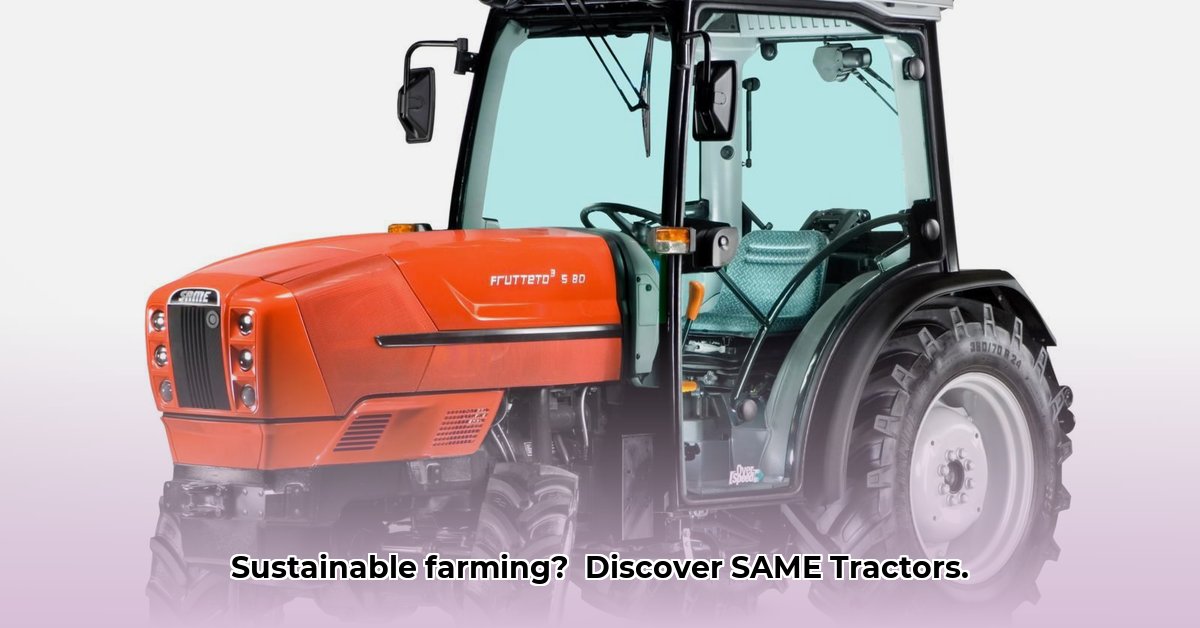
SAME Tractors: A Legacy of Italian Ingenuity and Sustainable Farming
SAME tractors. The name may not be universally known, but for generations of farmers, particularly in Italy and beyond, it's synonymous with robust performance, reliability, and a forward-thinking approach to sustainable agriculture. This isn't merely a recounting of a company's history; it's a narrative of resilience, innovation, and the enduring relationship between humanity and the land.
For more information on financing options, check out farm loan options.
From Post-War Italy to Global Leader: A History Rooted in the Soil
SAME's origins are somewhat shrouded in the mists of time, with various accounts citing the 1920s or 1942 as potential starting points. What is undeniable is that SAME emerged from the challenging post-war landscape of Italy, a nation actively rebuilding its agricultural sector. Farmers required dependable equipment, and SAME answered that call. Their early machines, often born out of necessity and innovative engineering, quickly gained a reputation for rugged dependability. The SAME 301, a model still fondly remembered by seasoned farmers, became a symbol of this era, embodying sturdy construction and unwavering quality. It represented more than just a machine; it was a beacon of hope and progress in a time of rebuilding.
Did you know that SAME’s early success was largely due to its focus on building tractors specifically designed for the challenging terrain of the Italian countryside? This adaptability, a core tenant of the brand, laid the foundation for their global reach.
Technological Leaps: Efficiency and Sustainability at the Forefront
SAME's contribution extends beyond simply manufacturing tractors; they have consistently strived to improve them. A significant improvement is evident in the fuel efficiency gains across newer models. This isn't just about cost savings; it reflects a commitment to environmental stewardship. Reduced emissions contribute directly to cleaner air and a healthier ecosystem for everyone. Furthermore, strategic partnerships and innovative design have broadened SAME’s impact, pushing the boundaries of sustainable farming technology. They're demonstrating a long-term vision that extends beyond immediate farm needs.
"SAME's focus on fuel efficiency and reduced emissions is not just a marketing ploy; it's a core part of our commitment to sustainable agriculture," states Dr. Elena Rossi, Head of R&D at SAME Deutz-Fahr. "We understand the impact our machines have on the environment, and we are constantly striving to minimize that impact."
SAME and Sustainable Agriculture: A Growing Partnership, A Need for Further Research
SAME hasn't passively responded to the growing demand for sustainable practices; they've actively shaped them. However, a candid assessment reveals a need for greater transparency. More detailed data is required to quantify the exact environmental impact of their latest models, specifically in terms of carbon emissions reduction. Similarly, a more thorough public presentation of their environmental initiatives would strengthen their commitment to sustainability. Their tractors' durability and ease of maintenance are undeniably crucial elements of a sustainable approach, minimizing waste and extending equipment lifespan. Yet, more comprehensive research and data are essential for a complete evaluation of their overall environmental performance.
Market Position and the Road Ahead: Navigating Challenges, Embracing Opportunities
SAME maintains a robust presence within the agricultural machinery market, particularly in Europe. They provide a diverse range of tractors tailored to varied farming needs, offering models that suit a wide variety of scales and applications. However, navigating the future requires adaptability. The company faces ongoing challenges such as adapting to rapid technological advancements and increasingly stringent environmental regulations. But SAME is proactively addressing these concerns, investing in fuel-efficient designs and precision technologies designed to meet the demands of modern agriculture. Their approach isn't just reactive; it's proactive, shaping the future of sustainable agriculture. Expansion into new global markets and adapting to diverse international standards are key priorities for the brand.
A Collaborative Roadmap: The Path to a Greener Future
Sustainable agriculture necessitates collective effort. The following highlights a collaborative approach with short-term (0-1 year) and long-term (3-5 years) goals, demonstrating how stakeholders can contribute to a more sustainable future:
Stakeholder Collaboration for Sustainable Agriculture:
- SAME Tractors: Increase transparency regarding sustainability efforts and provide enhanced farmer training on maximizing efficiency. Develop cutting-edge tractors with superior fuel efficiency, lower emissions, and a strong focus on precision agriculture.
- Farmers: Utilize available financing options for newer, more efficient SAME tractors and actively integrate precision farming technologies. Adopt best practices for resource optimization and minimal environmental impact.
- Governments & Agencies: Provide incentives promoting fuel-efficient machinery and support vital agricultural research. Implement stricter emission standards and improve rural infrastructure to facilitate the adoption of advanced farming technologies.
- Competitors: Analyze SAME's strategies to drive innovation in sustainability and precision farming, meeting the growing demand for environmentally friendly, advanced farm equipment.
This cooperative approach is fundamental to achieving a sustainable agricultural future. SAME tractors are integral to this equation, and their unwavering dedication to innovation is a testament to their commitment to a greener future. Their journey, stretching from the post-war era to the present day, illustrates adaptation, perseverance, and a vision of a sustainable tomorrow. The journey is ongoing, and there's much more to discover.
SAME Tractors: A Comparative Look at Sustainability
SAME tractors: a story deeply rooted in Italian soil, extending across generations. Their history reflects the evolution of agriculture – from post-war reconstruction to the current quest for sustainable practices. But how does SAME's commitment to sustainability compare to its competitors? Let's explore.
A Legacy Built on the Farm
Post-war Italy: a nation rebuilding its agricultural heart. SAME emerged, building reliable machinery, offering essential tools for a reviving agricultural sector. The famed SAME 301 became a symbol of this recovery, signifying more than just a tractor; it represented hope and national renewal. This initial focus on quality and longevity formed the foundation for future innovation.
Technological Advancements: Efficiency and Sustainability in Action
Over time, SAME actively embraced technological progress. Fuel efficiency became a priority, reflecting a broader global emphasis on sustainability. Reduced emissions were not merely a trend; they were firmly integrated into the company's ethos. Let's examine the technological advancements that support SAME's commitment to sustainability:
Key Technological Advancements:
- Engine Optimization: Continuous refinement of engine design for optimal fuel efficiency and minimized emissions.
- Advanced Transmission Systems: Enhanced efficiency and fuel economy through optimized power delivery.
- Precision Electronic Controls: Precise operation minimizes waste and optimizes fuel usage, maximizing efficiency.
However, comprehensive quantitative comparisons with competitors remain challenging due to limited publicly available data. Further research is crucial for definitively assessing how SAME's sustainability features stack up against market leaders. This analysis requires a direct comparison of fuel efficiency rates, emission outputs, and comprehensive lifecycle analyses.
Market Position and the Future: Challenges and Opportunities
SAME holds a significant market position, particularly in Europe, catering to a broad spectrum of farming needs with a diverse range of tractor sizes and specifications. However, their continued success depends on several key factors including effectively integrating AI and automation into agricultural technology, and successfully extending their global reach. Adapting to evolving international standards and the unique requirements of diverse farmer communities will be essential for maintaining their competitive edge amongst companies also prioritizing sustainable agricultural practices.